
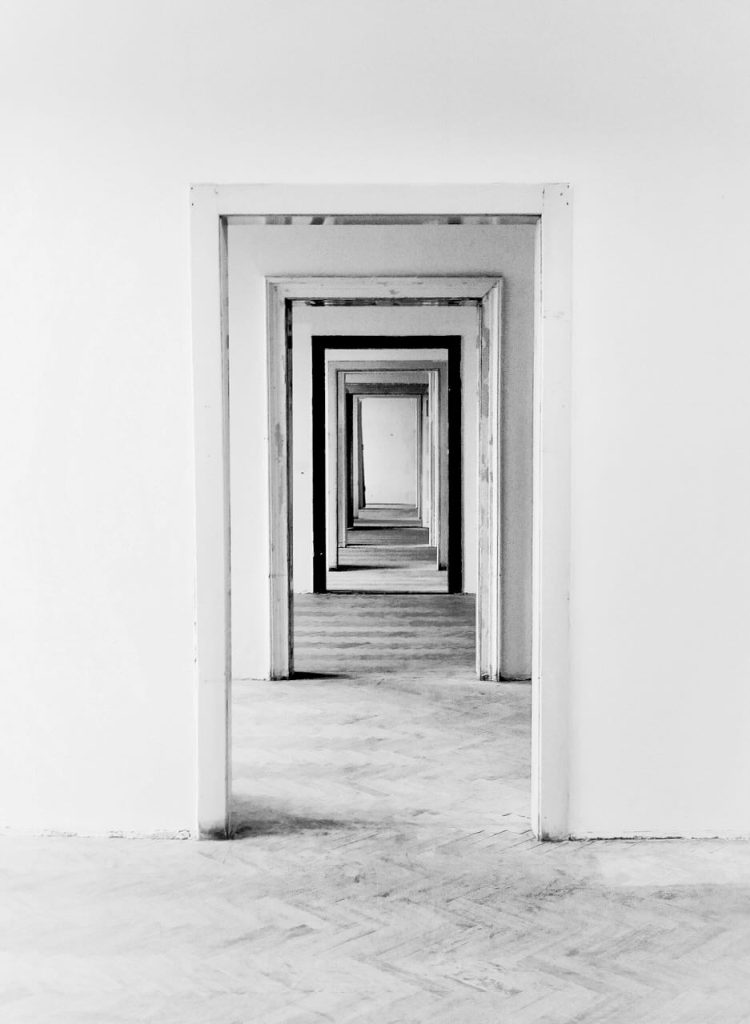
Photo courtesy of Filip Kominik, unsplash.com
I remember a client — I’ll call him David — who had just walked away from the company he’d built over twenty-two years. Not forced out. Not bought out. He chose to leave. And yet when he sat across from me, he looked like a man who had survived a car accident and wasn’t quite sure yet which bones were broken.
“I don’t know what I am anymore,” he said.
I didn’t answer right away. I let that sit where it landed.
Then I asked him: “Where are you standing right now — in the old room, the new room, or the doorway?”
He looked at me like I’d lost my mind. Then, slowly, something shifted behind his eyes.
Here’s what I’ve come to know after years of sitting with people in the hardest chapters of their lives: we are terrified of transitions not because we don’t trust where we’re going, but because we don’t trust the in-between. That narrow, uncertain corridor between what was and what will be.
We may call it anxiety, fear, or being stuck.
I call it the doorway.
Think about how little attention we actually pay to doorways in our daily lives. We pass through dozens of them without a single conscious thought. We don’t pause in them. We don’t study them. We treat them as nothing more than a gap between where we were and where we’re headed — invisible, unremarkable, something to move through as quickly as possible. And yet every single one of them is doing something real. They are marking a boundary. They are holding a threshold. They are quietly, faithfully connecting one part of our lives to another. Those tricky transitions.
They are, in genuine and overlooked ways, part of the journey itself. Not merely the space between stops, but a stop of their own.
We just never slow down long enough to notice.
Until life makes us.
Because when life hands you a real transition — a marriage ending, a career dissolving, a diagnosis arriving, a child leaving, an identity outgrown — suddenly that doorway feels enormous. And terrifying. And you can’t rush through it no matter how hard you try.
Here’s something worth knowing: in an earthquake, one of the oldest pieces of survival advice is to stand in a doorway. Why? Because the frame is load-bearing. Structurally, it’s one of the most protected places in the building. When everything is shaking, the doorway holds.
Sit with that.
When your world is shaking — when the ground beneath your certainty is shifting and nothing feels solid — the doorway isn’t the danger. The doorway is the protection.
I’ve sat with CEOs who lost everything. Founders who had to dismantle what they’d spent their best years building. Athletes who just won but wondered what the rest of life held. Men and women at the height of their outer success who privately felt hollowed out, unrecognizable to themselves. And in every single case, the suffering wasn’t really about what had ended. It was about standing at the threshold and not knowing how long they’d have to stay there.
Nobody warns you that transitions have their own timeline. That you don’t get to negotiate how long the doorway takes.
But here’s what I’ve watched happen, again and again: the people who stop fighting the doorway — who actually pause, breathe, and stand in it — those are the ones who arrive on the other side changed in the way that matters. Not just moved. Transformed.
David eventually figured out what he was. Not by rushing into the next room, but by standing still long enough in the threshold to ask himself questions he’d never had the courage to ask when he was too busy running a company. Questions like: What do I truly believe now? What did all of that teach me that I haven’t yet used? Who am I when the title’s gone? Who do I want to be now? Why?
Those aren’t comfortable questions. But they’re the right ones. And they only get asked in the doorway — never on the run.
If you’re in a transition right now — if you’re standing somewhere between the life you’ve known and one you can’t quite picture yet — I want you to do something.
Close your eyes. Picture a doorway. Feel the frame on either side of you. Solid. Holding. Designed to bear weight precisely at the moment when everything else is moving.
That’s where you are.
You’re not lost. You’re not broken. You’re not failing the transition because it’s taking longer than you think it should.
You’re in the doorway. And the doorway is doing exactly what it was built to do — holding you safe while the shaking passes.
The next room is already there, waiting.
You’ve walked through a thousand doorways without a second thought. This one deserves your attention. This one is part of your story.
Take your time.
What doorway are you standing in right now — and what question are you afraid to ask while you’re there?
