
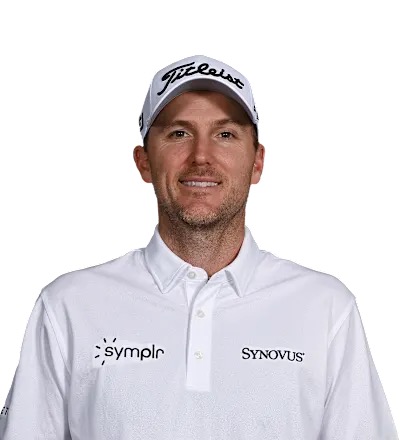
Russell Henley
—I enjoyed watching the PGA Tour tournament at Colonial Country Club in Fort Worth, TX. A number of “name” players skipped the event due to scheduling, but it still delivered on drama. I’m always intrigued whenever a player is trying to secure his first PGA Tour win. In this era of “Signature” events, it’s often the unsung tournaments featuring players with unfamiliar names that pique my interest. As it’s been often said, a first PGA Tour victory can be a life-changing event. And besides, the player gets into the Masters (so long as the event qualifies).
Eric Cole almost broke into the winner’s circle, but Russell Henley spoiled it by making birdies on his last three holes in regulation and then another one on the playoff hole. If you’re going to win on Tour, don’t rely on others faltering while leading. There’s always someone, like the straight-hitting Henley, charging from behind. As consolation, Cole took home $1,079,100.
Kudos to Colonial CC for being a venue that lived up to the test. Through the genius of architect Gil Hanse, the storied layout underwent a renovation and held its own against modern technology and PGA Tour players. Its doglegs and angles mitigate against the bombers off of the tee and require more shot-making. Remember this was the course where Annika Sorenstam teed it up in her only PGA Tour start in 2003. She didn’t make the cut, but she was close, because her comparative lack of Tour length wasn’t as much of a factor.
—It was quite a performance and personal comeback by Wyndham Clark when he won at Dallas two weeks ago by shooting a final round 60 to finish at 30-under 254 total for the week. I realize the players played “lift, clean and place” for three rounds, but that’s ridiculously low. Poor Si Woo Kim, the third-round leader who on Friday bogied his last hole (a par five!) and still shot 60. On Sunday, with a two-shot lead, he cards a final round 65 and still gets beat!

Wyndam Clark
I only wish Clark had apologized in his post-round interview with CBS’s Amanda Balionis to the members of Oakmont CC for his temper tantrum at the US Open last June, when he damaged one of the historic lockers. Instead, he mentions his sponsors who “stood by me.” What a missed opportunity to express regrets. I always recall a line by some sage who said that a heartfelt apology has the power to change a past wrongdoing.
Okay, back to THE CJ CUP Byron Nelson tournament. Scottie Scheffler almost set a new PGA Tour scoring record (established in 1982) on that Sunday when he narrowly missed not scoring a 5 during a 72-hole tournament. He went 65 holes without a 5 on his card when he made a par at the par-five 12th hole. After 72 holes, he had made only one five.
—Earlier at Aronimink in May during the PGA Championship, the subject of tree removal at historic courses was raised in a negative light for the first time in recent memory. Oakmont started the trend in 2007, removing over 4,000 trees to restore the course to its links-like origins. Knowing it wouldn’t be popular with some members, the Oakmont grounds crew actually started the work in the middle of the night. Undaunted, Oakmont opened up the course, deepened bunkers, and gave the iconic layout a new look.
Soon after, scores of classic courses built in the same area, and often a similar victim of a “tree-happy” greens committee, followed Oakmont’s brave path and started its own ‘canopy clearance process.’ I recall a conversation with Michigan golf architect Jerry Matthews, who said in the ’60s the favorite type of layout was parkland, with most holes bordered by trees. His family’s nationally acclaimed course at woodsy Grand Haven GC epitomized the popular sentiment. Then, by the turn of the new century, he said, the preferred choice was a link
design, a more open layout devoid of trees, with fast, firm turf more commonly found overseas. Ironically, Grand Haven was transformed into American Dunes GC, a linksy design by Jack Nicklaus that resulted in the removal of thousands of trees and the exposure of tons of native sand.
—Back to Aronimink . In the press conferences leading up to Thursday’s PGA play, both Rory McIlroy and Jon Rahm expressed second thoughts and misgivings about the new look of the course, which followed the Oakmont trend toward a links design and feel.
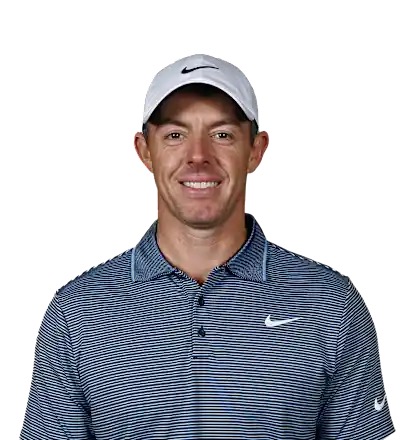
Rory Mcllroy
First up was McIlroy, long considered one of the strongest drivers in the game, but definitely not at the Masters, where he won with a balky driver. At the PGA, he said the following about Aronimink:
“I’m not sure if it’s going to test all aspects of your bag. There’s going to be a lot of — again, as I said, strategy off the tee is pretty nonexistent. It’s basically, bash driver down there and then figure it out from there, which I think is a lot of these newer — newly renovated — I think about Oak Hill in 2023, here. When these traditional golf courses take out a lot of trees, it makes strategy not as much of a concern off the tee.”
When I first read and heard these remarks, I wasn’t clear on what Rory was saying. I mean, links courses have preferred lines of play off of the tee, and they don’t need trees to provide them. Often it’s a mound or a bunker in the fairway. And Rory grew up playing links courses, like Royal County Down. I don’t think “bash a down there” is a stratagem there.
Next up was Rahm, and the reporters naturally followed up and asked his take on McIlroy’s comments. He defended the tree planting on these courses, saying, “In the back of my mind, they planted those trees with the future vision of having those trees in play, and now you’re taking them all out.” But later, he shared the perspective that fewer trees do improve turf quality and air movement, a long-held view favored by superintendents, always pressured to deliver quality playing conditions.
In any event, the remarks by two of the game’s best players gave pause to all the momentum for linksy designs and appearances of recent times.
One last thing: I have issues not with trees per se but with courses (read green committees or superintendents) not trimming them to maintain or restore the traditional corridors. Too many courses allow tree branches to extend too far into the fairway. That wasn’t the architect’s intention when the course opened, nor should it be today.
photos courtesy of the PGA TOUR
